
The Neuroscience of Love Languages

About Course

The Neuroscience of Love Languages
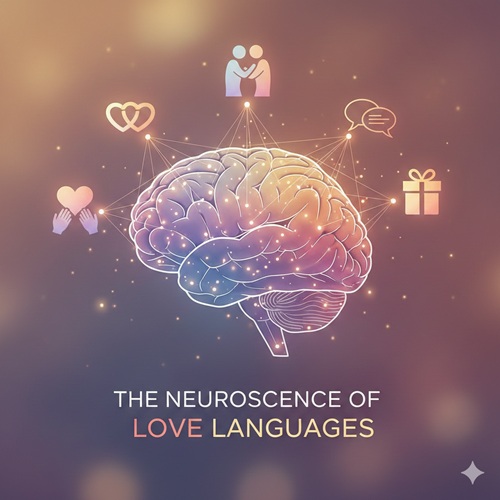
Welcome to an exciting journey into the fascinating intersection of neuroscience and human connection! This intermediate course explores the neurobiological foundations of Dr. Gary Chapman’s Five Love Languages through the lens of modern neuroscience. You’ll discover how our brains process different expressions of love, why certain gestures resonate more deeply with some individuals than others, and how understanding these neural pathways can transform your relationships.

This course bridges psychology, neuroscience, and practical relationship skills, offering a warm and engaging exploration of how our nervous systems respond to various forms of affection and appreciation. Through accessible explanations of complex neuroscience, real-world examples, and practical applications, you’ll gain a deeper understanding of yourself and others while developing skills to communicate love more effectively.

Whether you’re a mental health professional, educator, relationship coach, or simply someone passionate about understanding human connection, this course provides the scientific foundation and practical tools to enhance your personal and professional relationships.

Show More

What Will You Learn?

  • • The neurobiological basis of attachment and bonding in human relationships
  • • How different brain regions and neurotransmitters influence our perception and expression of love
  • • The neural mechanisms underlying each of the five love languages (Words of Affirmation, Quality Time, Receiving Gifts, Acts of Service, Physical Touch)
  • • Why individuals develop preferences for specific love languages based on neural development and experiences
  • • How to recognize love language preferences through behavioral and neurological indicators
  • • Practical strategies for applying neuroscience-informed approaches to improve relationship communication
  • • The role of neuroplasticity in adapting and expanding our capacity to give and receive love
  • • Cultural and individual variations in love language expression from a neuroscience perspective
  • • Methods for integrating love language awareness into therapeutic, educational, or coaching practices
  • • Evidence-based approaches to building stronger, more satisfying relationships

Course Content

Module 1: Foundations of Attachment Neuroscience
Module Overview This foundational module introduces you to the brain science behind human connection and attachment. Understanding how our brains form bonds is essential for grasping why love languages matter at a neurological level. You will explore the key brain structures involved in attachment, learn about the neurochemistry of bonding, and discover how early experiences shape our neural pathways for connection. This module sets the stage for understanding why different people prefer different expressions of love and how these preferences are rooted in our neurobiology. Learning Objectives • Identify the major brain structures involved in attachment and bonding • Explain the roles of oxytocin, dopamine, and serotonin in relationship formation • Describe how early attachment experiences create neural templates for adult relationships • Recognize the connection between attachment theory and neuroscience

  • Lesson 1.1: The Neural Architecture of Human Bonding
  • Lesson 1.2: Attachment Theory Meets Neuroscience
  • Lesson 1.3: Critical Periods in Emotional Development
  • Questions: 1
  • Activity 1.1: Mapping Your Attachment Neural Networks
  • Activity 1.2: Mirror Neuron Empathy Practice
  • Activity 1.3: Critical Period Exploration
  • Activity 1.4: Autonomic Nervous System Awareness
  • Activity 1.5: Professional Application – Attachment Assessment

Module 2: Words of Affirmation – The Language Processing Brain
Module Overview Words have power. For some individuals, verbal expressions of appreciation, encouragement, and love are the primary way they recognize and feel cared for. This module explores the neuroscience behind Words of Affirmation as a love language, examining how the brain processes language, emotional tone, and social feedback. You will discover why certain words create such strong emotional responses, how the brain distinguishes genuine from empty compliments, and what makes verbal affirmation so powerful for some people's sense of connection and worth. Learning Objectives • Understand how language processing regions interact with emotional centers in the brain • Explain the neurological difference between sincere and insincere verbal affirmation • Recognize how verbal feedback shapes self-concept and neural patterns • Apply knowledge of Words of Affirmation neuroscience to improve communication in relationships

Module 3: Quality Time – The Attention and Presence Brain
Module Overview Quality Time as a love language is about more than just being physically present. It involves focused attention, emotional presence, and genuine engagement. This module explores the neuroscience of attention, presence, and how the brain processes undivided focus from loved ones. You will learn about the neural circuits involved in sustained attention, the impact of divided attention in the digital age, and why some individuals feel most loved when they receive their partner's complete presence. Learning Objectives • Understand the neural mechanisms underlying focused attention and presence • Explain how mirror neurons facilitate emotional resonance during quality interactions • Recognize the impact of divided attention and multitasking on connection • Apply knowledge of attention neuroscience to create more meaningful quality time

Module 4: Receiving Gifts – The Symbolic and Reward Brain
Module Overview Receiving Gifts as a love language goes far beyond materialism. From a neuroscience perspective, gifts serve as tangible symbols of thought, care, and emotional investment. This module explores how the brain processes symbolic meaning, anticipation, and reward. You will discover why some people find gifts particularly meaningful, how the brain distinguishes between thoughtful and generic presents, and the neural mechanisms that make gift-giving such a powerful bonding ritual across cultures. Learning Objectives • Understand how the brain processes symbolic meaning and representation • Explain the role of dopamine and reward circuits in gift anticipation and receiving • Recognize the difference between material value and symbolic significance in neural terms • Apply insights about gift neuroscience to make giving more meaningful

Module 5: Acts of Service – The Practical Support Brain
Module Overview For some individuals, actions speak louder than words. Acts of Service as a love language reflects a brain that recognizes love through helpful behaviors, practical support, and thoughtful actions. This module examines the neuroscience of observing and receiving help, how the brain evaluates effort and intention, and why acts of service can be such a powerful form of emotional nourishment for certain people. You will explore the connection between perceived effort, caregiving behaviors, and attachment security. Learning Objectives • Understand how the brain processes helpful actions and evaluates effort • Explain the connection between acts of service and attachment security • Recognize the role of theory of mind in appreciating acts of service • Apply knowledge of service neuroscience to strengthen relationships through helpful behaviors

Module 6: Physical Touch – The Somatosensory and Bonding Brain
Module Overview Physical Touch is perhaps the most direct and neurologically powerful love language. From birth, touch shapes brain development and remains a primary mode of connection throughout life. This module explores the neuroscience of touch, including specialized receptors, the role of oxytocin, and how physical contact creates powerful emotional bonds. You will learn about the somatosensory cortex, CT afferents, and why some individuals particularly need physical expressions of affection to feel loved and secure. Learning Objectives • Understand the specialized neural pathways for affective touch • Explain how physical touch triggers oxytocin release and bonding • Recognize individual differences in touch sensitivity and preference • Apply touch neuroscience knowledge to enhance physical connection appropriately

Module 7: Neuroplasticity and Integrating Love Languages
Module Overview The final module brings together everything you have learned by exploring neuroplasticity - the brain's remarkable ability to change and adapt throughout life. You will discover how understanding and practicing love languages can literally rewire neural pathways, how couples can learn to speak each other's languages more fluently, and how this neuroscience knowledge can be applied in therapeutic, educational, and personal contexts. This module empowers you with practical strategies for creating lasting positive change in relationships. Learning Objectives • Understand the mechanisms of neuroplasticity and how it applies to relationship patterns • Explain how deliberately practicing new love languages creates neural change • Recognize strategies for integrating multiple love languages in relationships • Apply comprehensive neuroscience knowledge to enhance personal and professional relationships

Earn a certificate

Add this certificate to your resume to demonstrate your skills & increase your chances of getting noticed.

selected template

Student Ratings & Reviews

No Review Yet
No Review Yet
Scroll to Top