
Why People Love or Dislike Birthdays: A Psychological Exploration
About Course

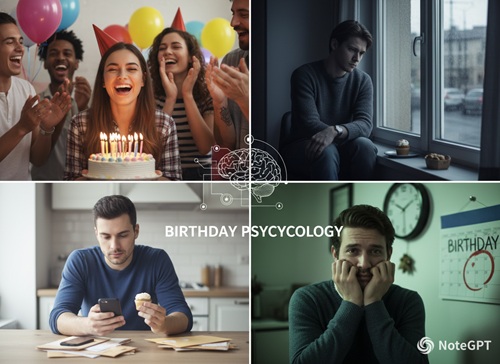
This course explores the fascinating psychological, social, and cultural factors that influence how individuals experience their birthdays. Through an evidence-based approach, learners will examine why some people eagerly anticipate their special day while others feel anxiety, sadness, or indifference. Drawing from developmental psychology, social psychology, and cultural studies, this course provides a comprehensive understanding of birthday attitudes and their underlying mechanisms.

Students will explore topics including childhood conditioning, social expectations, cultural variations, personality traits, and life transitions. The course combines theoretical frameworks with practical examples, making complex psychological concepts accessible and relatable. By the end of this course, learners will have developed a nuanced understanding of birthday psychology and gained valuable insights into human behavior, social dynamics, and emotional well-being.

Show More

What Will You Learn?

  • • Understand the psychological foundations of birthday celebrations and their emotional significance
  • • Identify key factors that shape positive and negative birthday attitudes
  • • Analyze how childhood experiences influence adult perspectives on birthdays
  • • Recognize the role of social expectations and cultural norms in birthday experiences
  • • Examine personality traits and individual differences that affect birthday preferences
  • • Evaluate how life transitions and aging impact birthday feelings
  • • Apply psychological principles to understand diverse birthday attitudes
  • • Develop empathy and awareness for different birthday experiences

Course Content

MODULE 1: Understanding Birthday Psychology – Foundations and Framework
Module Overview Welcome to the first module of our journey into birthday psychology. This foundational module introduces you to the core concepts that will help you understand why people have such varied reactions to their birthdays. We will explore the psychological underpinnings of celebrations, examine how birthdays function as social markers, and investigate the emotional landscape surrounding these annual events. Birthdays are universal milestones that everyone experiences, yet they evoke remarkably different emotions across individuals. This module sets the stage for deeper exploration by establishing key terminology, theoretical frameworks, and research findings that inform our understanding of birthday attitudes. Learning Objectives By the end of this module, you will be able to: • Define key psychological concepts related to birthday celebrations • Explain the social and psychological functions of birthdays • Identify major theoretical perspectives on birthday attitudes • Recognize the spectrum of birthday emotions and experiences • Understand how research approaches the study of birthday psychology

  • Lesson 1.1: The Psychology of Celebrations – What Makes Birthdays Special?
  • Lesson 1.2: The Spectrum of Birthday Attitudes – From Enthusiastic to Avoidant
  • Lesson 1.3: Research Perspectives – How Science Studies Birthday Attitudes
  • Activity 1: Personal Birthday Timeline
  • Activity 2: Birthday Attitude Spectrum Mapping
  • Activity 3: Cultural Birthday Research
  • Questions 1

MODULE 2: Childhood Foundations – How Early Experiences Shape Birthday Attitudes
Module Overview Childhood experiences profoundly influence our adult perspectives on birthdays. This module examines the developmental, familial, and social factors during childhood that lay the foundation for lifelong birthday attitudes. We explore how early birthday celebrations, family dynamics, peer interactions, and significant childhood events create lasting impressions that shape how we approach our birthdays as adults. Understanding these childhood foundations helps us appreciate why some adults eagerly anticipate their birthdays while others feel ambivalent or avoidant. This module combines developmental psychology principles with real-world examples to illuminate the connections between early experiences and current attitudes. Learning Objectives By the end of this module, you will be able to: • Explain how childhood birthday experiences influence adult attitudes • Identify key developmental stages and their relationship to birthday psychology • Recognize how family dynamics shape birthday expectations and feelings • Analyze the role of peer relationships in childhood birthday experiences • Understand how positive and negative childhood birthday events create lasting impacts • Apply attachment theory to explain birthday attitude formation

MODULE 3: Adult Perspectives – How Life Stages and Circumstances Affect Birthday Attitudes
Module Overview Adult birthday attitudes are not static; they shift and evolve in response to life stages, major transitions, personal circumstances, and changing priorities. This module examines how various factors in adult life influence birthday feelings, including aging concerns, achievement evaluation, relationship status, health issues, and major life changes. Understanding these adult-specific influences helps explain why someone's birthday attitudes might change over time and why milestone birthdays often carry particular psychological weight. We will explore young adulthood, middle age, and later life as distinct periods with characteristic birthday challenges and opportunities. We will also examine how unexpected life events, trauma, loss, and personal growth experiences reshape birthday meanings. Learning Objectives By the end of this module, you will be able to: • Identify how different adult life stages influence birthday attitudes • Explain why milestone birthdays often trigger strong emotional responses • Recognize how major life transitions affect birthday experiences • Understand the relationship between life satisfaction and birthday attitudes • Analyze how aging concerns and mortality awareness impact birthday feelings • Apply lifespan development theory to explain birthday attitude changes

MODULE 4: Cultural and Social Influences – How Society Shapes Birthday Attitudes
Module Overview Birthday attitudes do not develop in a vacuum; they are profoundly influenced by cultural values, social norms, media messages, and community practices. This module examines how broader social and cultural contexts shape individual birthday psychology. We will explore cultural variations in birthday traditions, social expectations and pressure, media influence, commercialization effects, and the role of religion and spirituality in birthday attitudes. Understanding these external influences helps us recognize which aspects of our birthday feelings stem from authentic personal preferences versus internalized social messages. This awareness creates opportunities for more intentional and satisfying birthday approaches. Learning Objectives By the end of this module, you will be able to: • Identify how different cultural contexts shape birthday attitudes and practices • Analyze the role of social norms and expectations in birthday experiences • Evaluate media and commercial influences on birthday psychology • Understand how religious and spiritual beliefs affect birthday attitudes • Recognize the impact of gender, class, and other social identities on birthday experiences • Apply cultural psychology concepts to understand birthday diversity

MODULE 5: Personality, Mental Health, and Individual Differences – Personal Factors in Birthday Attitudes
Module Overview While cultural, social, and developmental factors shape birthday attitudes, individual psychological differences create significant variation in how people experience birthdays. This final module examines personality traits, mental health factors, neurodiversity, and other individual characteristics that influence birthday psychology. Understanding these personal factors helps explain why people with similar backgrounds might have completely different birthday attitudes and provides insight into personalized approaches for improving birthday experiences. We will explore how personality dimensions affect birthday preferences, how various mental health conditions influence birthday feelings, how neurodiversity creates unique birthday challenges and needs, and how therapeutic approaches can help transform difficult birthday relationships. Learning Objectives By the end of this module, you will be able to: • Identify how major personality traits influence birthday attitudes and preferences • Explain how various mental health conditions affect birthday experiences • Understand unique birthday challenges faced by neurodivergent individuals • Recognize the role of trauma in shaping birthday attitudes • Apply therapeutic concepts to improve birthday experiences • Develop personalized strategies for creating satisfying birthday approaches

Earn a certificate

Add this certificate to your resume to demonstrate your skills & increase your chances of getting noticed.
selected template

Student Ratings & Reviews

No Review Yet
No Review Yet
Scroll to Top