
Teaching Brains – A Guide for Coaches and Educators
About Course
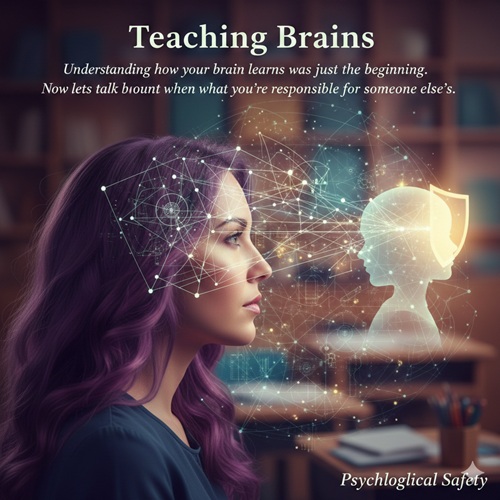
Teaching Brains
There is a profound difference between being a great learner and being a great teacher of neuro learning. Great learners understand their own brains. They know their patterns, their peak windows, and their most effective strategies.
They’ve built systems that work for them, and they’ve experienced firsthand the transformation that comes from genuinely understanding how their mind works.
Great educators understand other people’s brains. They know how to create the conditions in which learning becomes possible for someone else, someone with a different chronotype, a different history, a different relationship with failure, a different set of mental models, a different neurological profile.
They understand not just what works, but why it works, and that understanding allows them to adapt intelligently when the standard approach isn’t reaching a particular learner. That distinction between knowing and being able to transmit is what this course is about. If you’ve come through the beginner and intermediate courses in this pathway, you’ve built something remarkable. You understand memory consolidation, metacognition, deep work, mental models, energy management, feedback loops, neuroplasticity, and environment design.
You have a sophisticated, science-backed relationship with your own learning. Now we ask a different and more complex question: how do you create all of that for someone else? How do you design learning experiences that honour neuroscience? How do you build neuro learning environments, physical, psychological, relational, where other people feel safe enough not to know things yet? How do you give feedback that accelerates growth rather than triggering shame? How do you reach the learner who has spent decades believing they’re not capable and help them discover that the belief, not the capacity, was always the problem? These are the questions the Teaching Brains course answers. And they are not simple questions.
But they are extraordinarily important ones because educators and coaches who understand the brain don’t just teach content. They change people’s relationship with their own minds. And that is one of the most significant things one human being can do for another.
If you’ve found this pathway helpful, please consider leaving us a review.
Course Content
Module 1: The Shift – From Learner to Educator
-
Welcome to Module 1
-
What Actually Changes
-
The Curse of Knowledge
-
The Humility The Role Demands
-
What Stays the Same
-
The Three Roles of the Expert Educator
-
The Learner You Were Versus the Learner in Front of You
-
Key Takeaways from Module 1
Module 2: Designing for the Brain – Learning Experience Architecture
Module 3: Psychological Safety – The Non-Negotiable Foundation
Module 4: The Neuroscience of Neurodiversity
Module 5: Feedback as a Teaching Tool
Module 6: Working With Mindset, Shame, and Learned Helplessness
Module 7: Designing for Transfer
Module 8: Building Learner Autonomy
Module 9: The Reflective Educator – Your Teaching as a Learning System
End of Course Quiz
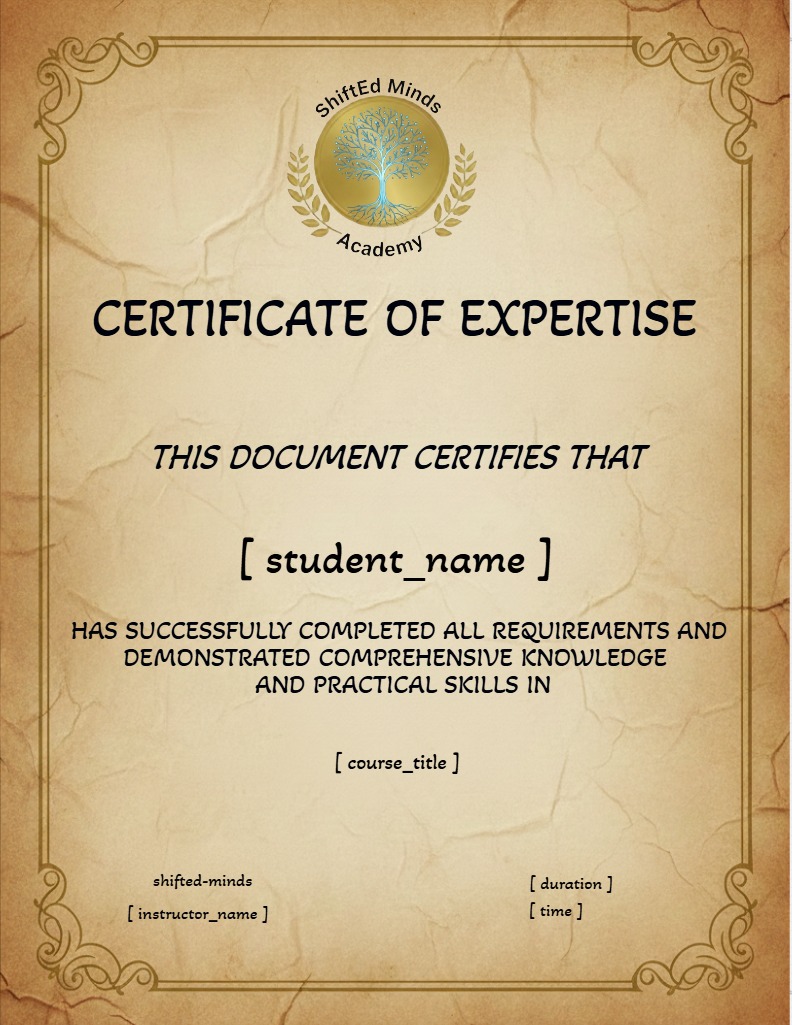
Earn a certificate
Add this certificate to your resume to demonstrate your skills & increase your chances of getting noticed.
Student Ratings & Reviews