
Rewired by Grace: Faith and the Transformed Brain
About Course
Rewired by Grace: Faith and the Transformed Brain
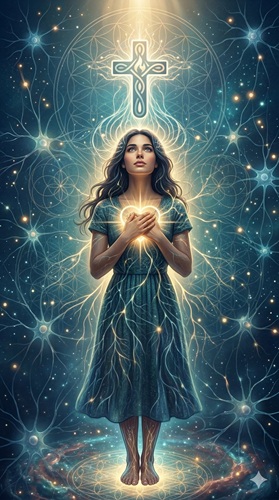
Have you ever wondered why prayer makes you feel calmer? Or why gratitude seems to lift your mood even on a hard day? Have you ever sat in a moment of genuine worship and felt something shift inside you, a quieting of anxiety, a settling of your spirit, a sense that you are, somehow, more yourself? These experiences are not accidental. They are not merely emotional. They are the meeting point of two extraordinary realities: the ancient wisdom of Christian faith and the modern science of the human brain.
Rewired by Grace: Faith and the Transformed Brain is a warm, academically grounded, and practically oriented beginner course that brings these two worlds into a rich and illuminating conversation. It is designed for new believers who are just beginning their journey of faith, for teenagers and young adults navigating questions of identity and meaning, for parents and home educators looking for integrated faith-and-learning resources, and for any curious adult who has ever wondered: Does what I believe actually change how my brain works? The answer, as this course reveals, is a resounding yes.
The course unfolds across five carefully designed modules, each one building on the last. You begin with the foundations of Christian faith itself, exploring what it truly means to trust God, who God is as Father, Son, and Holy Spirit, and what it means to receive the new life that Jesus offers. From there, you move into what the Bible itself says about the mind: how Scripture calls us to love God with our intellect, to renew our thinking, and to guard our thought life with wisdom and intention. In the third module, you are introduced to the remarkable organ you carry inside your skull, the human brain, discovering how it is structured, how it responds to stress and produces peace, and how the habits we form literally reshape its physical architecture over time.
The fourth module is where the course becomes particularly exciting: you explore the neuroscience behind the core practices of the Christian life. What actually happens in the brain during prayer? Why does worship produce measurable changes in mood and stress hormones? Why is genuine gratitude so much more than a polite religious habit, and why does scientific research confirm it as one of the most effective tools available for mental and emotional well-being? And what does neuroscience reveal about the profound importance of belonging, community, and the kind of koinonia that the early church embodied? The course concludes in Module 5 with a deeply practical focus: how to weave faith-and-brain habits into the fabric of ordinary daily life, how to handle anxiety and worry with both biblical wisdom and neuroscientific tools, and how to build the kind of small, sustainable, grace-filled routines that produce lasting transformation over time.
Throughout the course, each lesson connects biblical truth directly to cutting-edge neuroscience research in ways that are accessible, engaging, and genuinely illuminating. You will encounter the work of researchers such as Dr. Andrew Newberg, whose brain imaging studies have captured what happens neurologically during prayer and spiritual experience. You will discover how the apostle Paul’s instruction in Romans 12:2 to “be transformed by the renewing of your mind” corresponds almost exactly to what neuroscientists now call neuroplasticity, the brain’s lifelong capacity to change and be reshaped by what we think, believe, and practise. You will learn why the negativity bias of the human brain makes intentional gratitude not just spiritually virtuous but neurologically necessary. And you will explore why the loneliness epidemic identified by public health researchers makes the church’s call to genuine community not merely a social nicety, but a matter of life and health.
This is not a dry academic textbook. It is a living, breathing conversation between the Scriptures, the latest neuroscience research, and your everyday life. Every lesson is written with warmth, clarity, and a deep respect for the learner. You do not need a background in theology to engage with the faith content, and you do not need a science degree to follow the neuroscience. Each concept is explained with accessible language, real-world examples, and vivid illustrations. Each module closes with hands-on activities and reflective exercises designed to help you move from information to genuine personal transformation, and with clear assessment questions that help you consolidate and check your understanding.
What makes Rewired by Grace distinctive is not simply that it covers both faith and neuroscience, but that it holds them together with integrity. This is not a course that reduces spiritual experience to brain chemistry, nor one that dismisses scientific understanding in favour of simplistic religious answers. It is a course built on the conviction that truth is truth that the God who designed the brain and the God who inspired the Scriptures is the same, and that understanding both more deeply can only deepen our wonder, our faith, and our capacity to live well. By the time you complete this course, you will not only understand your faith and your brain better. You will have begun to experience, from the inside, what it looks like when grace rewires a life.
If you find this course helpful, please consider leaving us a rating.
“If you’re interested in the science behind learning and faith, you might also like our Neuroscience & Cognitive Studies courses.”
Your next course is waiting:
Step 1: Faith and the Transformed Brain
Align your thoughts with truth and renew your mind.
Step 2: Where Brain Science Meets Discipleship
Live it. Walk it. Teach it.
Step 3: Rewired for the Kingdom
Break old patterns. Discover who you are in Christ.
Course Content
MODULE 1 What is Christian Faith?
-
Lesson 1.1 Faith as Trust, Not Just Religion
-
Lesson 1.2 Who is God? Father, Son, and Holy Spirit
-
Lesson 1.3 Jesus and New Life
-
Activity 1: The Trust Reflection Journal
-
Activity 2: Trinity Relationship Map
-
Activity 3: Gospel Story Timeline
-
Activity 4: A Letter of Introduction
-
Module 1: Assessment Questions
MODULE 2 Bible, Mind, and Heart
MODULE 3 Meet Your Brain
MODULE 4 Faith Practices and the Brain
MODULE 5 Everyday Faith & Brain Health
Student Ratings & Reviews