
Neuroscience of Needs vs. Wants: Decision Mastery
About Course

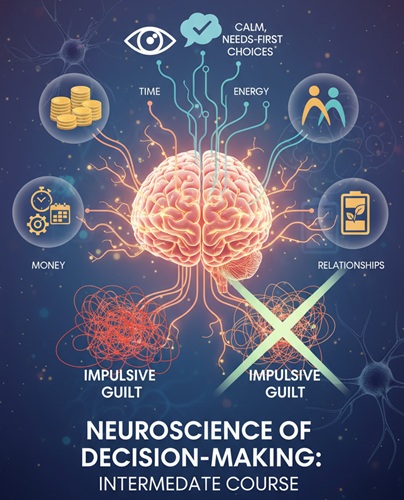
This intermediate course offers a neuroscience-based approach to transforming how you make decisions about money, time, energy, and relationships. Drawing on contemporary research in behavioral neuroscience, cognitive psychology, and decision-making science, you’ll learn to identify and interrupt impulsive, guilt-driven patterns while building new neural pathways that support calm, needs-first choices. Through practical exercises and real-world applications, you’ll discover how your brain processes needs versus wants, why guilt and impulse hijack your prefrontal cortex, and how to rewire automatic responses into intentional decisions. This course provides the neurobiological foundation and practical tools to shift from reactive to responsive living, creating sustainable change that honors your authentic needs while managing the inevitable pull of wants.

We’d love your feedback 

If this course supported your growth or sparked new insights, please take a moment to leave us a review on Google.

Your words help others find us, and help us keep creating meaningful, stigma-free learning experiences.

Leave a review here

Show More

What Will You Learn?

  • • Understand the neurobiological differences between needs-based and wants-based decision-making
  • • Identify how guilt, shame, and impulsivity activate specific brain regions that override rational choice
  • • Apply the neuroscience of interoception to recognize authentic needs in real-time
  • • Implement evidence-based strategies to strengthen prefrontal cortex function for better decision-making
  • • Create personalized neural rewiring practices that support needs-first thinking across life domains
  • • Develop sustainable systems for managing money, time, energy, and relationships based on neurobiological principles
  • • Recognize and interrupt automatic guilt responses that lead to wants-driven choices
  • • Build cognitive flexibility to navigate the gray areas between needs and wants
  • • Apply dopamine regulation strategies to reduce impulsive decision-making
  • • Create a long-term maintenance plan for sustaining needs-based decision patterns

Course Content

Module 1: The Neuroscience of Needs vs. Wants
Module 1 Overview This foundational module explores the neurobiological basis for distinguishing needs from wants, examining how different brain systems process survival requirements versus desire-based impulses. You'll learn about the evolutionary origins of these systems and why modern life creates confusion between the two. Learning Objectives: • Define needs and wants from a neuroscience perspective • Identify the primary brain regions involved in processing needs versus wants • Explain the evolutionary purpose of both needs-based and wants-based neural circuits • Recognize how modern environments create neural confusion between needs and wants

  • Lesson 1.1: Defining Needs and Wants Through a Neuroscience Lens
  • Lesson 1.2: The Brain’s Default Decision-Making Pathways
  • Lesson 1.3: How Modern Life Hijacks Needs-Based Thinking
  • Activity 1.1: Needs vs. Wants Body Mapping
  • Activity 1.2: Decision Pathway Tracking
  • Activity 1.3: Modern Hijack Audit.
  • Questions: 2

Module 2: The Guilt-Impulse Connection
Module 2 Overview This module examines how guilt and shame create neurological vulnerability to impulsive, wants-driven decisions. You'll learn about the specific brain mechanisms through which negative emotions compromise executive function and drive compensatory behaviors that don't address underlying needs. Learning Objectives: • Explain how guilt and shame activate stress response systems that impair prefrontal function • Identify the neurological mechanisms linking negative emotions to impulsive decision-making • Recognize compensatory behaviors driven by guilt in your own decision patterns • Understand how the brain's prediction error system perpetuates guilt-driven cycles

Module 3: The Neuroscience of Calm, Needs-First Decisions
Module 3 Overview This module explores the neurological conditions that enable calm, deliberate decision-making based on genuine needs. You'll learn about prefrontal cortex optimization, interoceptive clarity, and the specific neural states that support needs-first thinking across life domains. Learning Objectives: • Identify the neural conditions necessary for calm, deliberate decision-making • Explain how interoceptive awareness supports needs recognition • Apply strategies for optimizing prefrontal cortex function • Understand the role of emotional regulation in maintaining needs-based focus

Module 4: Rewiring Automatic Responses
Module 4 Overview This module focuses on the practical neuroscience of changing established patterns, teaching you how to create new neural pathways that support needs-based decisions and weaken old pathways that drive wants-based impulses. You'll learn about neuroplasticity principles and specific techniques for rewiring automatic responses. Learning Objectives: • Explain the neuroscience of habit formation and change • Apply specific neuroplasticity principles to decision-making patterns • Implement strategies for weakening want-driven neural pathways • Create and strengthen needs-based decision pathways through deliberate practice

Module 5: Overcoming Common Obstacles
Module 5 Overview This module addresses the predictable challenges that arise when implementing needs-based decision-making, providing neuroscience-informed strategies for the obstacles everyone encounters during change. ### Learning Objectives: - Identify common neurological vulnerabilities that derail needs-based decisions - Apply specific strategies for high-stress or high-temptation situations - Understand and work with rather than against natural resistance to change - Develop resilience for maintaining new patterns during challenging times

Module 6: Sustaining Needs-Based Living
Module 6 Overview This final module focuses on long-term maintenance, helping you create sustainable systems for needs-based decision-making that persist across varying life circumstances and continue developing over time. ### Learning Objectives: - Create a personalized Needs-First Decision Protocol for ongoing use - Design environmental and social supports for sustained change - Develop practices for continued self-awareness and pattern refinement - Build resilience for long-term maintenance across varying life circumstances

Earn a certificate

Add this certificate to your resume to demonstrate your skills & increase your chances of getting noticed.

selected template

Student Ratings & Reviews

No Review Yet
No Review Yet
Scroll to Top