
Understanding PTSD: The Brain, Body & Path to Healing
About Course

The Brain, Body & Path to Healing

Welcome to one of the most compassionate and scientifically grounded journeys you will ever take. This course offers you a warm, academically rigorous, and deeply human introduction to Post-Traumatic Stress Disorder (PTSD). Whether you are a caregiver, a professional, a student, or someone who simply wants to understand what happens in the brain after trauma, this course is your starting point.

We have carefully designed each module to balance neurobiological accuracy with everyday language, so that you never feel lost in jargon but always feel respected as a learner. You will explore the clinical definition of PTSD, the four symptom clusters, the fascinating neuroscience of trauma memory, the body’s survival responses, and the remarkable evidence-based treatments that offer genuine hope for recovery.

Behind every statistic you will encounter in this course is a real person. We hold that truth throughout every lesson. Our philosophy is simple: people are not broken. The nervous system is doing exactly what it was designed to do, and with understanding comes compassion, and with compassion comes healing.

We’d love your feedback 

If this course supported your growth or sparked new insights, please take a moment to leave us a review on Google.

Your words help others find us, and help us keep creating meaningful, stigma-free learning experiences.

Leave a review here

Show More

What Will You Learn?

  • • Define PTSD using the current DSM-5-TR and ICD-11 diagnostic criteria
  • • Differentiate between everyday stress, acute stress disorder, and PTSD
  • • Identify and describe the four primary symptom clusters of PTSD
  • • Explain the neurobiological roles of the amygdala, hippocampus, and prefrontal cortex
  • • Describe how trauma disrupts normal brain function and memory consolidation
  • • Understand the HPA axis, cortisol dysregulation, and the autonomic nervous system's role in PTSD
  • • Recognize why PTSD symptoms are adaptive survival responses, not signs of weakness
  • • Identify evidence-based psychotherapies including EMDR, CPT, and Prolonged Exposure
  • • Understand how medication supports PTSD treatment alongside psychotherapy
  • • Apply trauma-informed communication principles in personal and professional settings
  • • Develop genuine compassion for those living with PTSD through scientific understanding
  • • Access reliable resources for continued learning and support

Course Content

MODULE 1 Understanding PTSD: The Basics
Module 1 Overview In this foundational module, we begin our journey into understanding PTSD by exploring what it truly means, how it is diagnosed, and why it develops in some people after traumatic experiences. We distinguish PTSD from normal stress responses and discover the compassionate truth that PTSD symptoms are the nervous system's attempt to keep you safe, not signs of weakness or personal failure. Learning Objectives: 1. Define PTSD using current DSM-5-TR and ICD-11 diagnostic criteria 2. Differentiate between everyday stress, acute stress disorder, and PTSD 3. Identify the four symptom clusters of PTSD 4. Understand global prevalence rates and common misconceptions 5. Recognise how PTSD develops following traumatic experiences

  • Lesson 1.1: What is PTSD? Defining the Disorder
  • Lesson 1.2: The Four Symptom Clusters of PTSD
  • Lesson 1.3: How PTSD Develops: From Trauma to Disorder
  • Activity 1: The Trauma Timeline Reflection
  • Activity 2: Symptom Cluster Mapping Exercise
  • Activity 3: Compassion Practice: The Survival Letter
  • Activity 4: Myth-Busting Social Media Post
  • Questions 1

MODULE 2 The Neurobiology of PTSD
Module 2 Overview In this module, we journey into the fascinating world of neuroscience to understand exactly what happens in the brain when trauma leads to PTSD. You will discover how three key brain structures, the amygdala, the hippocampus, and the prefrontal cortex, work together under normal circumstances and how trauma disrupts their communication. We explore the stress response system, the HPA axis, the autonomic nervous system, and the concept of neuroplasticity. Understanding the biology behind PTSD transforms how we think about it: it is not a character flaw; it is a wound that the brain carries in its very architecture. Learning Objectives: 1. Identify and describe the three primary brain structures involved in PTSD 2. Explain how the amygdala, hippocampus, and prefrontal cortex normally function 3. Describe how trauma alters these structures and disrupts their communication 4. Understand the HPA axis and cortisol dysregulation in PTSD 5. Explain the autonomic nervous system's role in the trauma response 6. Appreciate neuroplasticity as the biological foundation for recovery

MODULE 3 Treatment and Recovery Pathways
Module 3 Overview In this final module, we explore the hopeful landscape of PTSD treatment and recovery. You will learn about evidence-based therapeutic approaches, the role of medication, complementary strategies, and trauma-informed communication principles. Most importantly, this module holds space for the truth that recovery from PTSD is not just possible, it is probable with the right support. The neuroscience you have learned throughout this course is the foundation beneath every treatment approach: they all work, in different ways, by helping the brain and body do what they were always designed to do, which is heal. Learning Objectives: 1. Identify and describe evidence-based psychotherapies for PTSD 2. Explain the neurobiological mechanisms through which these therapies create change 3. Understand the role of pharmacological treatment alongside psychotherapy 4. Recognise complementary and lifestyle approaches that support recovery 5. Apply trauma-informed communication principles 6. Develop realistic and hopeful expectations for the recovery journey

MODULE 4 Living With and Beyond PTSD: Resilience, Growth & Community
Module 4 Overview This module ventures into territory that is often neglected in clinical discussions of PTSD: the terrain beyond symptom reduction, toward genuine post-traumatic growth, community healing, and lifelong resilience. We will explore the fascinating research on Post-Traumatic Growth (PTG), the role of community and culture in trauma recovery, the concept of resilience as a dynamic and learnable set of practices, and what it means to build a life that integrates the trauma experience without being defined by it. Learning Objectives: 1. Define and describe Post-Traumatic Growth (PTG) and its five domains 2. Understand the relationship between PTG and continued distress 3. Explore cultural and community dimensions of trauma and healing 4. Identify neurobiological and psychological foundations of resilience 5. Recognise the importance of meaning-making in trauma recovery 6. Develop a personal resilience framework grounded in evidence

MODULE 5 Special Topics: PTSD Across the Lifespan and Special Populations
Module 5 Overview This module extends our understanding of PTSD across the diversity of human experience. PTSD does not present identically across all ages, genders, cultures, or professional contexts. By exploring PTSD in children and adolescents, in first responders and healthcare workers, in the context of moral injury, and in relation to neurodiversity, we deepen our capacity to recognise and respond to trauma with greater accuracy and compassion. Learning Objectives: 1. Describe how PTSD presents differently in children and adolescents compared to adults 2. Understand occupational PTSD and moral injury in first responders and healthcare workers 3. Recognise the intersection of PTSD with neurodivergent presentations 4. Understand vicarious trauma and secondary traumatic stress 5. Apply population-specific knowledge to more accurate recognition and support

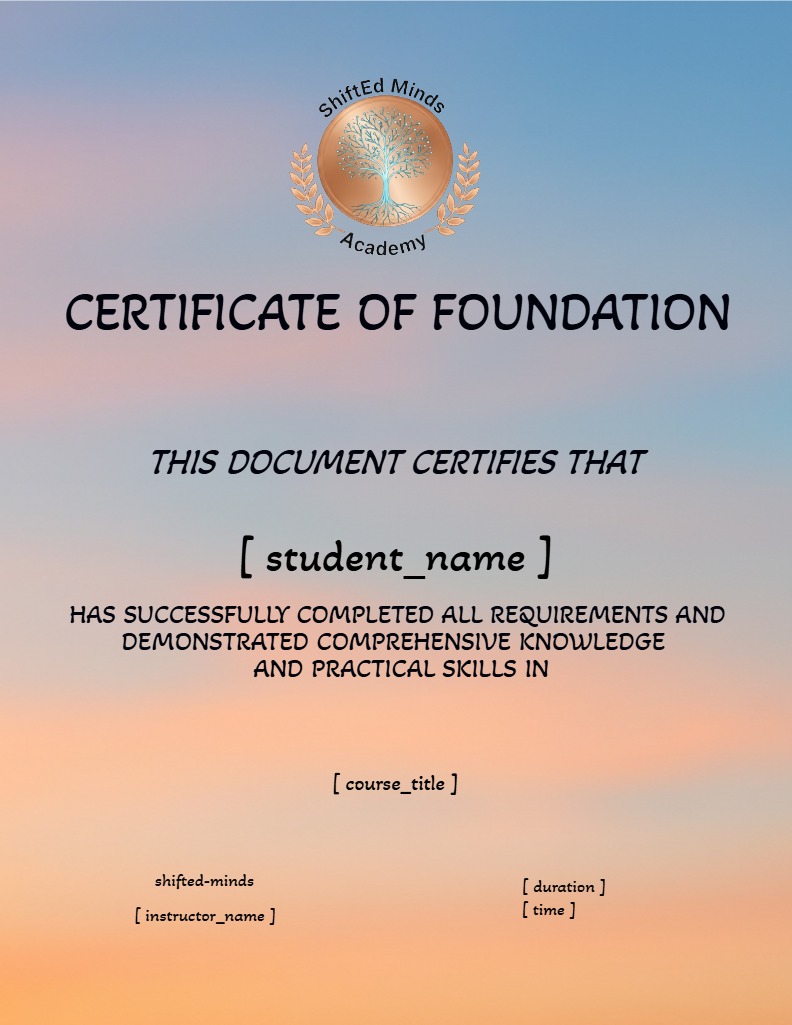
Earn a certificate

Add this certificate to your resume to demonstrate your skills & increase your chances of getting noticed.
selected template

Student Ratings & Reviews

No Review Yet
No Review Yet
Scroll to Top