
The Psychology of Spotting a Liar

About Course

The Psychology of Spotting a Liar

Have you ever wondered whether someone was telling you the truth? Whether it was a colleague bending the facts in a meeting, a child fibbing about their homework, or a news anchor delivering a scripted statement, deception is a universal human behaviour. And the good news? With the right knowledge and practice, you can learn to spot it.

Welcome to The PsychThe Psychology of Spotting a Liarology of Spotting the Liar, a warm, academically grounded, and genuinely fascinating course that brings together cutting-edge neuroscience, behavioural psychology, and real-world application to help you become a more perceptive, emotionally intelligent human being.

This course is not about becoming suspicious of everyone around you. Far from it! It is about developing nuanced, science-backed observational skills that allow you to tune into the full spectrum of human communication, both verbal and non-verbal. You will explore how the brain processes deception, what physiological and cognitive cues tend to accompany lying, how cultural and individual differences shape deceptive behaviour, and how professional investigators and psychologists apply these tools in the real world.

Each module is packed with accessible explanations, memorable examples, practical activities, and critical thinking exercises. By the end of this course, you will not be a human lie detector (those do not really exist!), but you will be a much sharper, more thoughtful observer of human behaviour.

If you find this course helpful, please consider leaving us a rating.

Show More

What Will You Learn?

  • • Understand the neurological and psychological foundations of deception, including what happens in the brain when someone lies.
  • • Identify and interpret verbal cues, including changes in speech patterns, narrative inconsistencies, and linguistic distancing.
  • • Recognise non-verbal indicators of deception such as microexpressions, body language, and physiological stress responses.
  • • Apply baseline comparison techniques to distinguish normal behaviour from potential deceptive behaviour.
  • • Critically evaluate the reliability and limitations of lie detection methods, including polygraphs and AI-based tools.
  • • Understand how context, culture, stress, and neurodivergence influence the expression and interpretation of deceptive cues.
  • • Develop ethical frameworks for applying deception-detection knowledge responsibly in personal and professional settings.
  • • Practise observational skills through structured exercises, case studies, and reflective activities.

Course Content

MODULE 1 The Science of Deception: What Lying Really Is
Learning Objectives: By the end of this module, learners will be able to: define deception and distinguish it from other forms of communication; explain the neurological processes involved in lying; describe why humans lie and how often deception occurs in everyday life; and begin to apply critical thinking to popular myths about lie detection.

  • Lesson 1.1: What Is a Lie? Defining Deception Across Cultures and Contexts
  • Lesson 1.2: The Brain on Lies – Neuroscience of Deception
  • Lesson 1.3: Why Do People Lie? Motivation, Morality, and Human Nature
  • Activity: The Lie Audit
  • Activity: Taxonomy Practice
  • Activity: Brain Mapping Exercise
  • Activity: The Consent to Deception Thought Experiment
  • Questions 1

MODULE 2 Reading the Body: Non-Verbal Cues and Deception
Learning Objectives: By the end of this module, learners will be able to: identify the key categories of non-verbal communication; describe what microexpressions are and how they relate to deception; interpret body language cues in context rather than in isolation; and avoid common misconceptions about body language and lying.

MODULE 3 Words Don’t Lie (Or Do They?): Verbal Cues and Linguistic Analysis
Learning Objectives: By the end of this module, learners will be able to: identify verbal cues and linguistic patterns associated with deception; explain how statement analysis and linguistic profiling are used by investigators; recognise narrative inconsistencies and unusual speech patterns in context; and understand the limitations of verbal cue analysis.

MODULE 4 Context, Culture, and Individual Differences in Deception
Learning Objectives: By the end of this module, learners will be able to: explain how cultural background shapes deception and its detection; identify how individual differences including personality, neurodivergence, and emotional intelligence affect deceptive behaviour; apply a more nuanced, contextually aware approach to interpreting potential deception cues; and appreciate the serious risks of misreading honest behaviour as deceptive.

MODULE 5 Applied Deception Detection: Ethics, Limits, and Real-World Practice
Learning Objectives: By the end of this module, learners will be able to: apply an integrated deception-detection framework drawing on verbal, non-verbal, and contextual analysis; critically evaluate the ethical implications of applying deception-detection knowledge; assess the limitations and appropriate applications of technological lie detection tools; and design a personal practice plan for developing observation skills responsibly.

Earn a certificate

Add this certificate to your resume to demonstrate your skills & increase your chances of getting noticed.
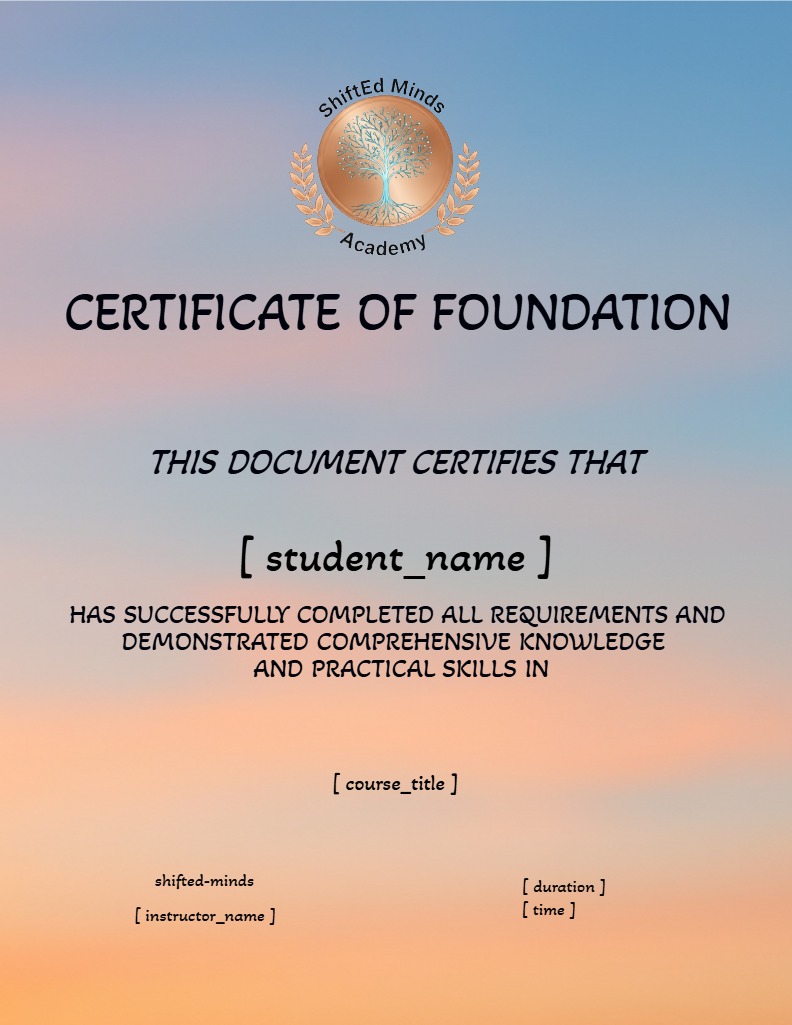
selected template

Student Ratings & Reviews

No Review Yet
No Review Yet
Scroll to Top