
LEGO Pedagogy and Child Development.

About Course

LEGO Pedagogy and Child Development.
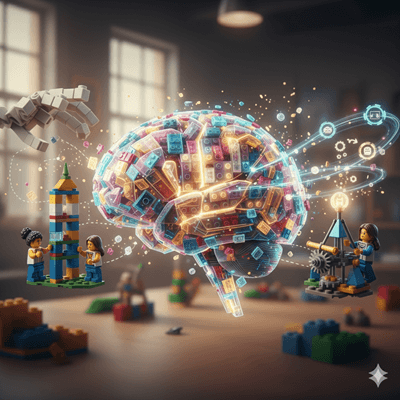
Welcome to one of the most exciting, hands-on, and brain-friendly professional development courses available for educators, therapists, parents, and child development specialists! This intermediate-level course takes you on a fascinating journey into the world of LEGO-based pedagogy, exploring how structured and free play with LEGO bricks connects directly to child brain development, learning theory, and neuroscience.

This is not just a course about building with bricks. It is a deep, academically grounded exploration of why play matters at a neurological level, how LEGO-based approaches align with evidence-based educational frameworks, and how you can design and deliver LEGO-inspired learning experiences that genuinely change the trajectory of a child’s development. Whether you work in a classroom, a therapeutic setting, a home education environment, or a community organisation, this course will give you the knowledge, confidence, and tools to harness the remarkable power of play with purpose.

Grounded in neuroscience, developmental psychology, and best-practice pedagogy, this course bridges theory and practice in a way that is warm, accessible, and immediately applicable. You will leave with a solid academic foundation AND a practical toolkit you can use from day one.

Show More

What Will You Learn?

  • • Explain the neurological and developmental mechanisms that make play an essential component of healthy child development.
  • • Describe key child development theories (Piaget, Vygotsky, Froebel, Bruner, and others) and connect them to LEGO-based learning.
  • • Understand how LEGO Serious Play methodology works and apply its core principles to educational and therapeutic contexts.
  • • Identify how different brain regions are activated during constructive, imaginative, and collaborative play.
  • • Design structured LEGO-based learning activities that align with neurodevelopmental best practices.
  • • Adapt LEGO pedagogy for neurodiverse learners, including children with ADHD, autism spectrum conditions, sensory processing differences, and dyspraxia.
  • • Use observation, documentation, and reflective practice to assess learning through LEGO-based activities.
  • • Navigate ethical considerations, safeguarding principles, and professional standards in play-based learning contexts.
  • • Communicate the value of LEGO pedagogy to parents, colleagues, school leaders, and funders with confidence and academic credibility.

Course Content

MODULE 1 The Science of Play: Why LEGO Works
Module Overview This module introduces learners to the foundational science behind play and why LEGO bricks, in particular, have become one of the most powerful educational tools in the world. We explore what the brain is doing during play, what developmental science tells us about the necessity of play, and how the unique design features of LEGO make it an exceptional medium for learning. Learning Objectives By the end of this module, learners will be able to: • Define play and distinguish between different types of play and their developmental functions • Explain what happens in the brain during play activities • Identify the unique features of LEGO that make it a pedagogically powerful tool • Describe the relationship between constructive play and cognitive development

  • Lesson 1.1: What is Play? Defining the Undefinable
  • Lesson 1.2: What the Brain Does During Play
  • Lesson 1.3: Why LEGO? The Unique Pedagogy of the Brick
  • Question 1

MODULE 2 Child Development Frameworks and LEGO Pedagogy
Module Overview This module explores the major theoretical frameworks in child development and education, and examines how LEGO pedagogy aligns with and is informed by each. From Piaget's stages of cognitive development to Vygotsky's zone of proximal development, from Froebel's gifts to Bruner's spiral curriculum, this module situates LEGO-based learning within a rich tradition of developmental thought. Learning Objectives • Describe the key principles of major developmental and educational theories • Connect each theoretical framework to specific LEGO pedagogical approaches • Explain the Zone of Proximal Development and how it informs LEGO facilitation • Articulate the relationship between concrete experience and abstract thinking

MODULE 3 Neurological Foundations of Creative Learning
Module Overview This module dives deep into the neuroscience that underpins creative and constructive learning. We explore how the brain processes physical and spatial information, how creativity is generated at a neural level, how stress affects learning, and what the latest neuroscience tells us about optimal conditions for deep, lasting learning. This is where pedagogy meets neurobiology. Learning Objectives • Describe the role of the default mode network in creativity and imagination • Explain how stress hormones affect learning and why play is neuroprotective • Identify the neurological basis for embodied cognition and its relevance to LEGO learning • Describe how memory consolidation works and how LEGO activities support it

MODULE 4 LEGO as a Tool for Neurodiverse Learners
Module Overview This module explores how LEGO-based approaches can be adapted, designed, and delivered to support neurodiverse learners, including children with ADHD, autism spectrum conditions, sensory processing differences, dyspraxia, and anxiety. We explore the evidence base for LEGO-Based Therapy, discuss neurodiversity as a strengths-based framework, and provide practical guidance for inclusive LEGO facilitation. Learning Objectives • Define neurodiversity and explain the strengths-based model of neurological difference • Describe the evidence base for LEGO-Based Therapy (LBT) in autism support • Identify adaptations to LEGO activities that support learners with ADHD, autism, dyspraxia, and anxiety • Apply inclusive design principles to LEGO-based learning experiences

MODULE 5 Designing LEGO-Based Learning Experiences
Module Overview This module moves from theory to practice, equipping you with the frameworks, tools, and skills to design engaging, purposeful, and developmentally appropriate LEGO-based learning experiences. We explore the principles of good task design, how to facilitate effectively, and how to embed LEGO activities within existing curricula and therapeutic programmes. Learning Objectives • Apply the four-phase LEGO learning cycle to session design • Design LEGO-based activities aligned with specific learning objectives • Identify the qualities of effective facilitation in LEGO learning contexts • Embed LEGO activities within curriculum frameworks and therapeutic programmes

MODULE 6 Assessment, Observation, and Documentation
Module Overview How do we know if LEGO-based learning is working? This module explores a range of assessment and observation strategies that are compatible with play-based learning contexts. We examine how to document children's learning, use observation as an assessment tool, and communicate the educational value of LEGO activities to parents, colleagues, and stakeholders. Learning Objectives • Describe formative and summative assessment approaches appropriate to LEGO-based learning • Apply structured observation frameworks to LEGO sessions • Create documentation that captures and communicates learning through LEGO activities • Communicate the educational value of LEGO pedagogy to stakeholders

MODULE 7 Professional Practice and Ethical Considerations
Module Overview This final module explores the professional and ethical dimensions of LEGO-based practice. We examine safeguarding in play-based contexts, professional boundaries, reflective practice, and the ongoing professional development of the LEGO educator or therapist. We also explore how to sustain and develop LEGO-based practice over the long term. Learning Objectives • Identify key safeguarding considerations in LEGO-based learning contexts • Apply professional boundaries and ethical frameworks to LEGO practice • Engage in reflective practice as a tool for continuous professional development • Develop a personal action plan for sustaining and developing LEGO-based practice

Earn a certificate

Add this certificate to your resume to demonstrate your skills & increase your chances of getting noticed.
selected template

Student Ratings & Reviews

No Review Yet
No Review Yet
Scroll to Top