
The Bipolar Compass: Understanding & Navigating Mood Shifts

About Course

The Bipolar Compass: Understanding & Navigating Mood Shifts
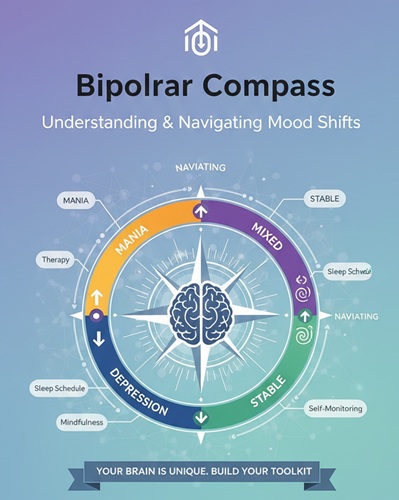
This is a comprehensive introduction to bipolar disorder that combines neuroscience, psychology, and practical strategies for understanding and managing mood fluctuations. This course provides a compassionate, evidence-based exploration of what bipolar disorder is, how it affects the brain and body, and how individuals can navigate their unique experiences with mood shifts.

Whether you are newly diagnosed, supporting a loved one, or simply seeking to understand bipolar disorder better, this course offers clear, accessible information grounded in current research. You will learn about the biological foundations of mood regulation, recognize different types of mood episodes, and discover practical tools for creating stability and wellness in daily life.

This course emphasizes that having bipolar disorder does not mean you are broken. Rather, it means your brain processes emotions and energy differently. By understanding these differences, you can build a personalized compass to navigate your mental health journey with confidence, self-compassion, and hope.

Show More

What Will You Learn?

  • • Define bipolar disorder and explain its neurobiological foundations
  • • Identify the different types of bipolar disorder and their characteristics
  • • Recognize the signs and symptoms of manic, hypomanic, depressive, and mixed episodes
  • • Understand how neurotransmitters and brain regions contribute to mood regulation
  • • Distinguish between genetic and environmental factors in bipolar disorder
  • • Develop strategies for building a strong support system
  • • Apply lifestyle interventions that support mood stability
  • • Identify personal triggers and early warning signs of mood episodes
  • • Understand various treatment options including medication and therapy
  • • Create a personalized Wellness Action Plan for long-term management

Course Content

MODULE 1: UNDERSTANDING BIPOLAR DISORDER
Module Overview: This foundational module introduces you to bipolar disorder, exploring what it is, how it affects the brain, and the different types that exist. You will gain a solid understanding of the basics before diving into more specific aspects of mood episodes and management strategies. Module Learning Objectives: • Define bipolar disorder and distinguish it from typical mood fluctuations • Explain the neurobiological basis of mood regulation • Identify and describe the main types of bipolar disorder

  • LESSON 1: WHAT IS BIPOLAR DISORDER? THE BASICS
  • LESSON 2: THE NEUROSCIENCE BEHIND MOOD SHIFTS
  • LESSON 3: TYPES OF BIPOLAR DISORDER
  • Questions 1
  • COURSE ACTIVITIES & EXERCISES

MODULE 2: RECOGNIZING MOOD EPISODES
Module Overview: In this module, you will learn to identify the different types of mood episodes that characterize bipolar disorder. Understanding the specific features of manic, hypomanic, depressive, and mixed episodes will help you recognize warning signs and patterns in yourself or loved ones. Module Learning Objectives: • Identify the key features and symptoms of manic and hypomanic episodes • Recognize the characteristics of major depressive episodes in bipolar disorder • Understand mixed episodes and rapid cycling patterns • Develop awareness of personal mood patterns and triggers

MODULE 3: THE BRAIN AND BIPOLAR DISORDER
Module Overview: This module delves deeper into the neurobiology of bipolar disorder, exploring the roles of neurotransmitters, specific brain regions, and the interplay between genetic and environmental factors. Understanding these biological foundations provides insight into why bipolar disorder occurs and how treatments work. Module Learning Objectives: • Explain how neurotransmitters contribute to mood regulation and dysregulation • Identify key brain regions involved in bipolar disorder and their functions • Understand the genetic and environmental factors that influence bipolar disorder • Recognize how biological knowledge informs treatment approaches

MODULE 4 LIVING WELL WITH BIPOLAR DISORDER
• Identify the components of a strong support system and develop strategies for building meaningful connections • Explain why sleep is critical for mood stability and create a personalized sleep hygiene plan • Describe how exercise, nutrition, and physical health impact bipolar disorder symptoms • Apply evidence-based stress management techniques to reduce the risk of mood episodes • Understand the particular risks of substance use for people with bipolar disorder • Identify your personal triggers for both manic and depressive episodes • Recognize early warning signs of mood changes before they become full episodes • Develop proactive strategies for responding to warning signs • Create a comprehensive wellness routine tailored to your unique needs • Communicate your needs effectively to family, friends, and healthcare providers

MODULE 5: TREATMENT AND LONG-TERM MANAGEMENT
Module Overview: This final module explores treatment options for bipolar disorder, including medications, therapy approaches, and strategies for long-term wellness. You will learn about different treatment modalities and develop a personalized Wellness Action Plan to support your ongoing stability and recovery. Module Learning Objectives: • Understand medical treatment options and how they work • Identify therapeutic approaches that support bipolar disorder management • Recognize the importance of long-term planning and relapse prevention • Create a personalized Wellness Action Plan

Earn a certificate

Add this certificate to your resume to demonstrate your skills & increase your chances of getting noticed.

selected template

Student Ratings & Reviews

No Review Yet
No Review Yet
Scroll to Top