
Neuroplasticity Explained: How the Brain Rewires Through Learning
It is not a Buzzword, it’s a Survival Mechanism
Neuroplasticity is often described as the brain’s ability to change.
That definition is technically correct and practically useless.
What matters is why the brain changes and what conditions allow it to happen.
Neuroplasticity exists because the brain’s primary job is adaptation.
Learning is simply adaptation made conscious.
Without the right conditions, plasticity doesn’t disappear; it just reinforces old patterns instead of building new ones.
What Neuroplasticity Actually Means
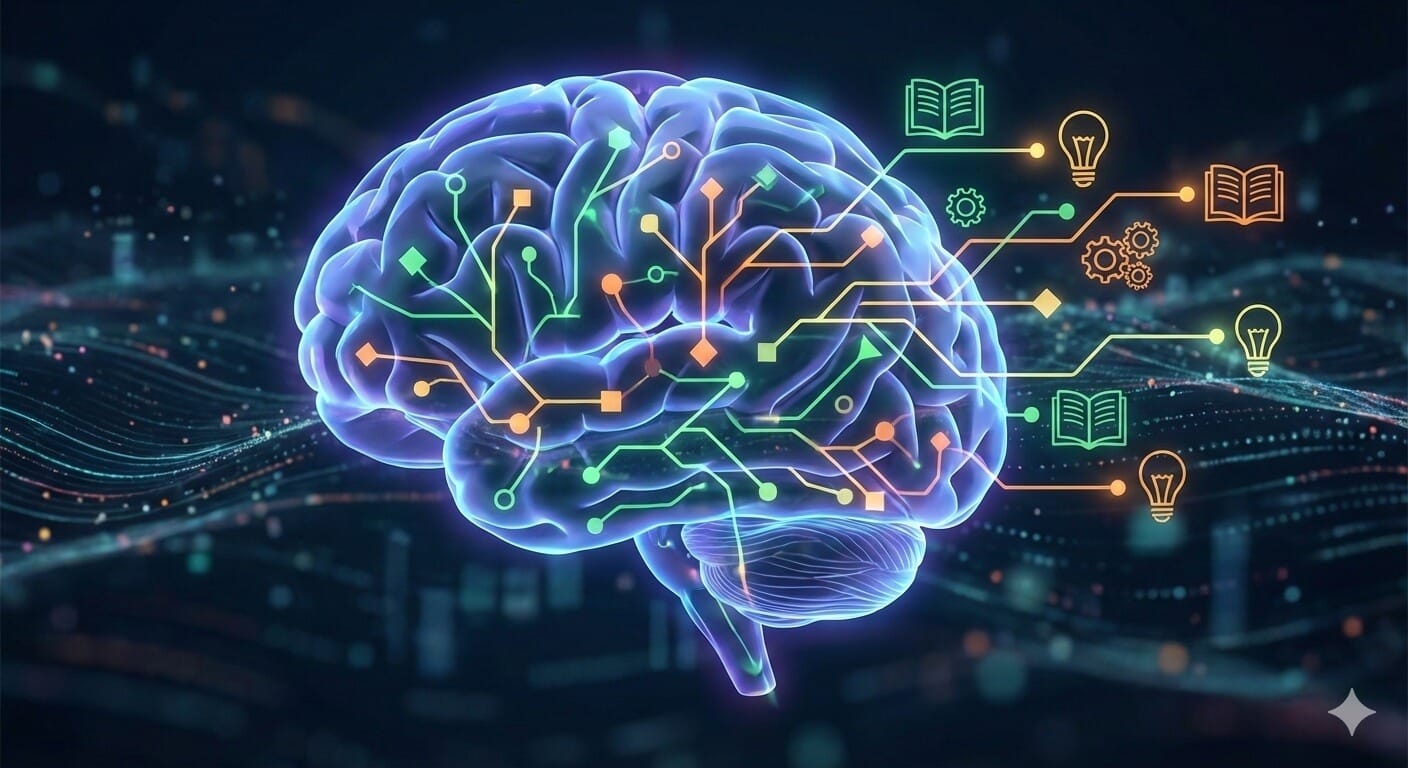
Neuroplasticity refers to the brain’s ability to:
- Strengthen existing neural connections
- Weaken unused ones
- Form entirely new networks
Every skill, belief, habit, and reaction you have lives in these networks.
Learning doesn’t add information to the brain.
It reshapes the structure itself.
(If you want the foundational mechanics behind this process, see: How the Brain Actually Learns: From Neural Pathways to Lasting Change.)
Plasticity Is Always On, Learning Is Not
Here’s the uncomfortable truth:
The brain is always rewiring.
It’s just not always rewiring in the direction you want.
Repeated stress strengthens stress pathways.
Ongoing avoidance strengthens avoidance.
Repeated self-doubt strengthens self-doubt.
This is why insight alone doesn’t create change.
Plasticity responds to experience, not intention.
Why Attention Is Non-Negotiable for Brain Change
Neuroplastic change requires focused attention.
When attention is scattered:
- Neural signals weaken
- Pathways don’t stabilise
- Learning remains fragile
This is why cognitive overload kills progress.
Plasticity depends on:
- Sustained focus
- Manageable cognitive load
- Emotional regulation
Which is why attention is the gateway, not an optional extra.
(This is explored in depth in: Attention, Focus, and Cognitive Load: Why Your Brain Switches Off.)
Repetition Isn’t Enough (Timing Matters)
Repetition builds pathways, but only when the brain is ready.
Effective repetition:
- Is spaced, not crammed
- Occurs when the brain is alert
- Includes reflection and feedback
Poor repetition:
- Reinforces confusion
- Strengthens inefficient patterns
- Increases frustration
The brain doesn’t reward effort.
It rewards efficient, meaningful use.
Emotion Determines What Sticks
Emotion is a plasticity amplifier.
When learning is paired with:
- Curiosity
- Relevance
- Psychological safety
…the brain releases neurochemicals that stabilise change.
When learning is paired with:
- Shame
- Fear
- Pressure
…the brain shifts into protection mode, prioritising survival over growth.
This is why force-based learning backfires.
Habits Are Plasticity on Autopilot
Habits are not behavioural problems.
They are well-worn neural pathways.
Trying to “break” a habit fails because the brain doesn’t delete pathways; it overrides them with stronger alternatives.
New habits require:
- Clear cues
- Low cognitive load
- Consistent context
- Emotional payoff
Without these, the brain defaults to efficiency, not change.
Why Adults Can Learn as Well as Children (Differently, Not Worse)
Plasticity does change with age, but it does not disappear.
Adults:
- Learn more slowly
- Learn more selectively
- Learn more meaningfully
The adult brain resists change that lacks relevance, not change itself.
This is why adult learning must respect:
- Autonomy
- Context
- Purpose
When it does, change is not only possible, but also durable.
Neuroplasticity and Identity
Some of the strongest neural pathways are tied to identity:
- “I’m not good at learning.”
- “I can’t focus.”
- “This is just how I am.”
These aren’t truths.
They’re rehearsed neural stories.
Changing identity-level patterns requires:
- Safe challenge
- Repeated evidence
- Self-directed reflection
This is where coaching, not instruction, becomes essential.
The Takeaway
Neuroplasticity is not about becoming someone new.
It’s about giving your brain the conditions it needs to:
- Let go of outdated patterns
- Build more useful ones
- Adapt without burnout
Learning works when it respects biology, not when it fights it.