
What Is Neuroscience‑Based Learning?
Neuroscience-based learning is grounded in a simple but powerful idea: when learning matches how the brain actually works, results improve. Instead of forcing focus, memorisation, or motivation, this approach works with the brain’s natural systems for attention, memory, emotion, and change. Learning isn’t just about effort. It’s about alignment.
In practice, this means designing learning experiences that respect the brain’s limits while leveraging its strengths. For example, attention is naturally cyclical and easily fatigued, so neuroscience‑informed methods use shorter learning segments, clear goals, and variation in activities to keep engagement high. Rather than expecting learners to concentrate intensely for long, uninterrupted periods, the material is structured into focused bursts, with brief breaks that allow the brain to reset and consolidate what has just been processed.
Memory
Memory, another key system, benefits from repetition that is spaced over time, such as active recall, and meaningful connections. Neuroscience‑based learning, therefore, avoids cramming and passive rereading as primary strategies. Instead, it encourages learners to retrieve information from memory through quizzes, practice questions, or teaching others, and to revisit core concepts at increasing intervals. By linking new information to what is already known and to real‑world contexts, the brain forms stronger, more durable memory traces, making knowledge easier to access later.
Emotions
Emotion also plays a central role. The brain prioritises information that feels relevant, surprising, or emotionally charged. Rather than treating feelings as distractions, this approach uses stories, curiosity, and personal relevance to create emotional hooks that make learning more memorable. A sense of progress, autonomy, and psychological safety further supports motivation by activating reward pathways and reducing fear‑based responses that can shut down higher‑order thinking.
Finally, neuroscience‑based learning recognises that change in the brain, often referred to as neuroplasticity, happens gradually through repeated, meaningful practice. Skills and understanding are not simply “installed”; they are built over time as neural pathways strengthen with use. By aligning teaching methods with this reality, providing progressive challenges, feedback, and opportunities to apply knowledge in different situations, learners can adapt more effectively and sustain their growth. In this way, working with the brain’s natural systems does not just make learning more efficient; it makes it more humane, realistic, and ultimately more successful.
At ShiftEd Minds, neuroscience is not theory for theory’s sake. It’s a practical framework for helping people learn, unlearn, and adapt in a fast‑changing world.
What Is Neuroscience?
Neuroscience is the scientific study of the nervous system, with a strong focus on the brain. It explores how neurons communicate, how habits form, how emotions influence thinking, and how experiences reshape neural pathways over time.
In simple terms, neuroscience explains:
- How information is processed and stored
- Why attention fluctuates
- How stress and safety affect learning
- How behaviour and belief patterns are formed
This science forms the foundation for neuroscience‑based learning.
What Is Neuroscience‑Based Learning?
Neuroscience‑based learning applies brain science directly to learning design, coaching, and personal development. It asks one core question:
What does the brain need in order to learn effectively and sustainably?
Rather than relying on outdated educational models, this approach integrates what we now know about:
- Neuroplasticity (the brain’s ability to change)
- Attention and cognitive load
- Memory formation and recall
- Motivation and emotional regulation
The result is learning that is more efficient, more human, and more durable.
Why Traditional Learning Often Fails
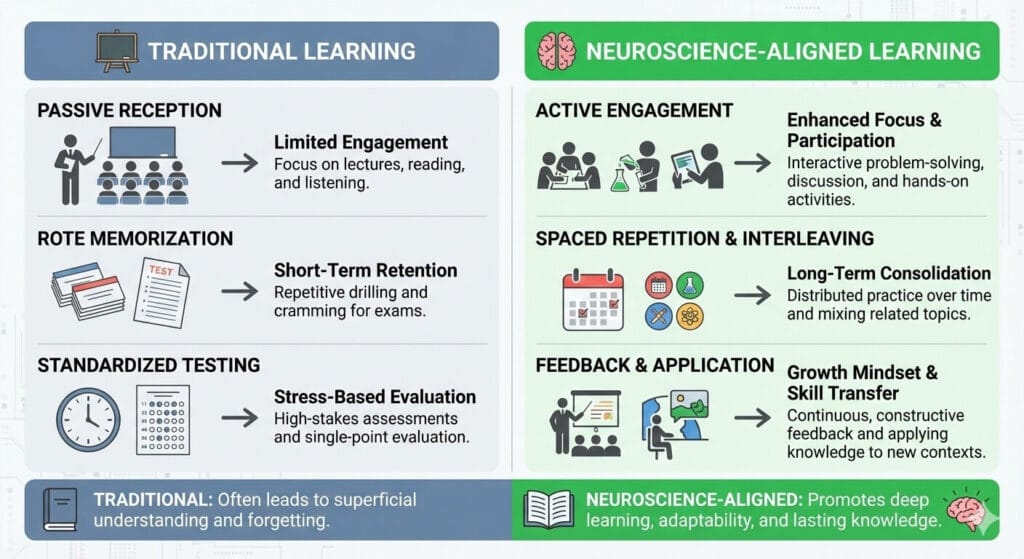
Many conventional learning systems still prioritise:
- Passive consumption
- One‑size‑fits‑all instruction
- High pressure with little recovery
- Memorisation without meaning
Neuroscience shows that these conditions often block learning rather than support it. When stress is high and engagement is low, the brain shifts into survival mode, not growth mode.
Neuroscience‑based learning corrects this mismatch.
Core Principles of Neuroscience‑Based Learning
1. The Brain Learns Through Experience
Learning strengthens when people actively engage, reflect, test ideas, and apply knowledge in context.
2. Neuroplasticity Enables Lifelong Learning
The brain remains adaptable throughout life. Growth is always possible, and habits, beliefs, and skills are not fixed.
3. Emotion Drives Attention and Memory
What we feel directly affects what we remember. Safe, meaningful, and motivating environments enhance learning.
4. Spacing Beats Cramming
Learning spread out over time builds stronger neural pathways than short bursts of overload.
5. Feedback Fuels Growth
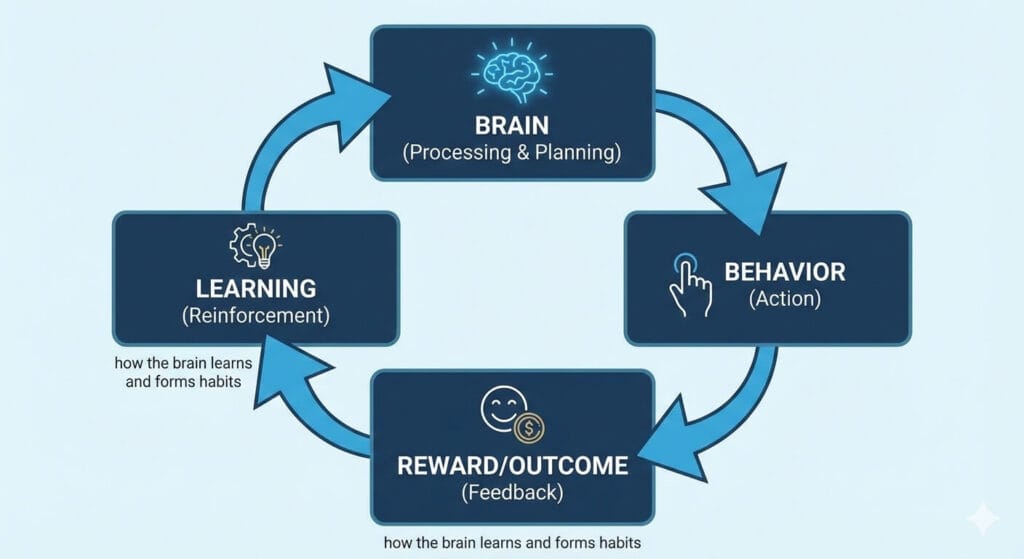
The brain learns most efficiently when it can compare its intentions with the actual outcomes and adjust its responses accordingly.
Neuroscience-based learning in South Africa
In South Africa, neuroscience-based learning is increasingly used by coaches and adult learners who need flexible, brain-aligned approaches outside traditional education.
How Neuroscience‑Based Learning Helps You Learn Smarter
When learning aligns with the brain, people experience:
- Greater focus without burnout
- Improved retention and recall
- Increased self‑trust and confidence
- Faster skill acquisition
- More consistent motivation
This is especially powerful for:
- Adults returning to learning
- Neurodivergent learners
- Professionals navigating career transitions
- Coaches supporting behaviour change
How the Brain Learns
Understanding neural pathways, attention, and emotional engagement is the foundation of effective learning.
→ How the Brain Actually Learns: From Neural Pathways to Lasting Change
How ShiftEd Minds Applies Learning Science
ShiftEd Minds integrates neuroscience into practical pathways that support brain-aligned learning
- Learning agility
- Cognitive flexibility
- Emotional regulation
- Sustainable personal growth
This isn’t about learning more; it’s about learning better, a neuroscience-based learning approach.
Frequently Asked Questions
Is neuroscience‑based learning the same as brain‑based learning?
They are closely related. Neuroscience‑based learning places a stronger emphasis on current scientific evidence rather than generalised techniques.
Is this only for education or schools?
No. It applies to coaching, workplace learning, habit change, and personal development.
Do I need a science background to use the neuroscience-based learning approach?
Not at all. The goal is translation, turning complex brain science into practical, usable strategies.
What is neuroscience-based learning for adults?
Neuroscience-based learning for adults focuses on how the adult brain processes, retains, and applies information. Unlike traditional education models designed for children, this approach recognises that adults bring prior experiences, established habits, and emotional contexts into learning. By leveraging neuroplasticity, reflection, and real-world application, adults can learn more effectively without overload or burnout.
How does neuroscience improve learning?
Neuroscience improves learning by revealing how attention, memory, emotion, and motivation work in the brain. When learning aligns with these systems — for example, using spaced practice instead of cramming or reducing stress to improve focus, information is retained longer and applied more confidently. In short, neuroscience replaces guesswork with evidence-based strategies.
Is brain-based learning useful for coaches?
Yes. Brain-based learning is especially valuable for coaches because it supports behaviour change, habit formation, and belief rewiring. Coaches who use neuroscience-informed methods can help clients build self-awareness, regulate emotions, and create sustainable change rather than relying on motivation alone.
Can adults really learn differently later in life?
Absolutely. Learning differently as an adult is not only possible. It’s normal. The adult brain remains adaptable throughout life, capable of forming new neural connections through experience and repetition. Neuroscience-based learning helps adults work with their brains rather than fight old patterns, making learning more efficient and less frustrating.
What are science-backed learning methods?
Science-backed learning methods are strategies supported by research in neuroscience and cognitive psychology. These include spaced retrieval, active recall, multisensory learning, reflection, and emotionally supportive learning environments. Unlike trends or quick fixes, these methods are grounded in how the brain actually learns and changes over time.
How the Brain Learns
Understanding neural pathways, attention, and emotional engagement is the foundation of effective learning.
→ How the Brain Actually Learns: From Neural Pathways to Lasting Change
Learning doesn’t have to feel forced, overwhelming, or broken.
If you’re ready to understand how your brain learns and use that knowledge to create lasting change, explore the learning pathways at ShiftEd Minds.