

Why Traditional Learning Models Fail, and How to Learn Smarter, Not Harder
Why Traditional Learning Models Fail, and How to Learn Smarter, Not Harder. For generations, we’ve been taught that learning is about sitting still, memorizing facts, and passing tests. But if you’ve ever felt frustrated, disengaged, or “not smart enough” in traditional classrooms, you’re not alone. The truth is: traditional learning models were never designed for the way the brain actually learns best.
At ShiftEd Minds, we believe there’s a better way, one that’s rooted in neuroscience, motivation, and personalized growth. Let’s explore why the old system fails so many of us, and how you can start learning smarter, not harder.
The Problem with Traditional Learning
Traditional education often emphasizes:
- Memorization over understanding
- Standardized methods that ignore individual learning differences
- Testing pressure, which increases stress and reduces retention
- Passive listening, rather than active engagement
These approaches may produce short-term results (like passing an exam), but they rarely create long-term mastery or curiosity.
What Neuroscience Says About Learning
Your brain is not a sponge that passively absorbs information; it’s an active, dynamic system. So, how do we experience the neuroscience behind effective learning
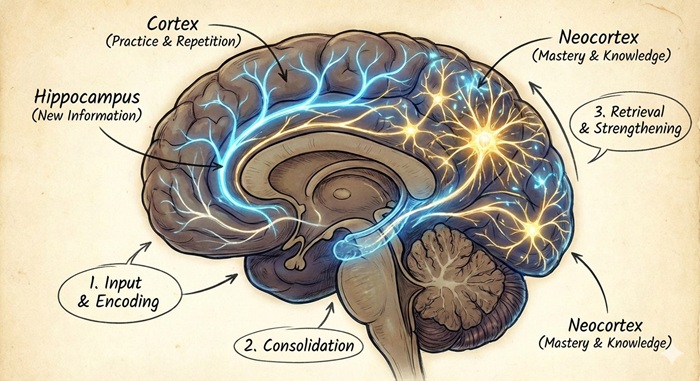
- Repetition strengthens neural pathways (practice beats cramming).
- Emotion locks in memory (we remember stories and feelings better than lists).
- Active engagement (doing, questioning, applying) builds deeper understanding.
- Rest and reflection consolidate new knowledge.
This means that most traditional models don’t just make learning harder – they actually go against how the brain is wired.
Smarter Ways to Learn (Based on Science)
Here’s how you can learn in alignment with your brain, with steps on learning smarter
1. Spaced Repetition
Instead of trying to memorize everything in one sitting, review material at increasing intervals (e.g., 1 day, 3 days, 1 week). This strengthens memory far more effectively.
2. Chunking
Break information into meaningful groups. For example, remembering a phone number as “082–123–4567” is easier than “0821234567.”
3. Active Recall
Test yourself rather than rereading notes. Retrieval practice strengthens the brain’s recall pathways.
Explore effective tips on retrieval practice with these practical suggestions in our article What Is Active Recall and Why Does It Beat Highlighting Every Time?
4. Emotional Connection
Link learning to something that matters to you. If you’re studying a new skill for your career, tie it to your vision of growth and success.
5. Learning by Teaching
Explaining a concept to someone else forces your brain to organize and simplify information, deepening your understanding.
Example: Learning Smarter in Real Life
Imagine you’re trying to learn presentation skills.
- Old model: Read about public speaking techniques, memorize tips, and hope you remember them on stage.
- Brain-based model: Practice short presentations (spaced repetition), break skills into chunks (voice, body language, storytelling), record yourself for feedback (active recall), and connect it to your goal of career growth (emotional connection).
The result? More confidence, faster mastery, and lasting growth.
Why This Matters for You
Learning smarter means:
- Less frustration and wasted time
- More confidence in your abilities
- Real, lasting skills you can apply immediately
Traditional education may have left you feeling stuck, but your brain is capable of so much more when you give it the right tools.
Final Thought
Learning doesn’t have to be hard. When you align with how the brain actually works, you unlock your natural potential to grow, adapt, and succeed.
At ShiftEd Minds, we help people like you transform the way they learn, so education feels exciting, empowering, and future-focused.
Ready to start? Pick one strategy from this article, spaced repetition, active recall, or even just teaching what you know to a friend, and experiment with it this week. Small shifts in how you learn can create big changes in what you’re able to do.
You’re not “bad at learning”; you may just have been using the wrong methods. When you work with your brain instead of against it, you don’t just absorb information, you transform who you are and what you’re capable of.
If you’re curious to go deeper, ShiftEd Minds is here to support you in rewiring the way you learn, so that growth becomes not just possible, but sustainable and enjoyable.