

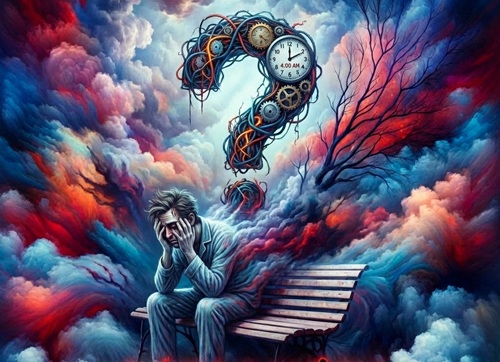
Why Can’t I Sleep?
If your body is tired but your mind won’t switch off
If you’re exhausted yet lying awake at night, asking, Why can’t I sleep? your not imagining it, and you’re not failing at rest. Sleep problems are often less about sleep itself and more about what your nervous system is carrying.
Many people assume sleep issues mean something is “wrong” with them. In reality, difficulty sleeping is one of the most common signs that your body doesn’t feel safe enough to fully power down.
This isn’t a weakness. It’s biology.
Why does sleep become difficult when you’re emotionally overwhelmed
Sleep requires a sense of safety. When your nervous system stays alert even subtly, your brain keeps scanning for threat instead of allowing deep rest.
This can happen when you’re:
- Carrying unresolved emotional pain
- Living in prolonged stress or grief
- Mentally exhausted but emotionally unprocessed
- Used to staying strong, hyper‑vigilant, or “on.”
At night, distractions fade. There’s no noise to buffer what you feel. That’s often when emotions finally surface, not because they’re new, but because they no longer have anywhere to hide.
Common thoughts that keep you awake
You might notice your mind looping around questions like:
- Why can’t I stop thinking?
- What if tomorrow is just as hard?
- Why does everything feel heavier at night?
- Why am I so tired but unable to sleep?
These thoughts aren’t random. They’re signals. Your system is asking for attention, not discipline.
This isn’t a sleep failure, it’s an emotional signal
When sleep disappears, many people try to force solutions: strict routines, supplements, pressure to “just relax.” While these can help, they often miss the deeper layer.
If your body has learned that night equals emotional exposure, it will resist rest — even when you desperately need it.
Sleep doesn’t improve through force. It improves through safety.
What can help right now (without pushing yourself)
Instead of trying to sleep, try shifting the goal:
- Focus on rest, not sleep
- Let your body lie down without expectation
- Ground yourself with slow breathing or gentle movement
- Remind yourself: I’m allowed to pause without fixing anything
Sometimes sleep returns when the pressure is removed. Don’t force yourself to try to sleep; instead, focus on relaxing.
Difficulty sleeping is often not the problem itself, but a sign that something inside hasn’t had space to settle yet.
How does difficulty sleeping connect to emotional pain?
Difficulty sleeping is often linked to deeper emotional experiences, grief, sadness, anger, or hurt that hasn’t yet been named.
If you’d like to understand this more fully, you may find it helpful to read:
They explore what happens when emotional pain stays active beneath the surface. When hurt doesn’t have room to be felt, expressed, or understood, it doesn’t disappear; it settles into the body. It can show up as tension, restlessness, or a constant hum of unease that becomes most noticeable at night.
Over time, this quiet, ongoing stress asks for more and more of your energy, making it harder to drop into deep rest. By gently acknowledging what’s been held inside, you’re not “digging up the past;” you’re allowing your system to process what it’s been carrying alone.
You’re not broken; your system is responding
Your body isn’t betraying you. It’s trying to protect you in the only way it knows how.
Sleep will return, not because you forced it, but because your system gradually learned it was safe to let go.
If this feels overwhelming right now, you don’t have to figure it out alone.