
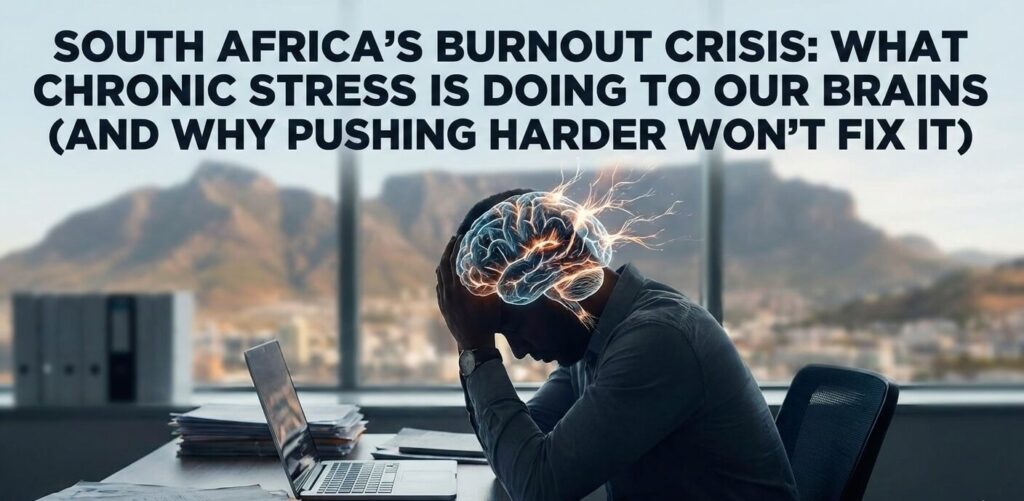
South Africa’s Burnout Crisis: What Chronic Stress Is Doing to Our Brains (and Why Pushing Harder Won’t Fix It)
South Africa’s Burnout Crisis: South Africa is not just tired; we are neurologically overloaded.
Recent data shows that over 40% of employees report high to extreme burnout, while more than a third of the population is classified as distressed or struggling. These figures are often framed as a productivity issue, a resilience gap, or an individual failure to cope better.
That framing misses what’s actually happening, and it makes things worse.
What we are witnessing is not a motivation problem or a mindset deficit. It is the predictable outcome of prolonged stress on the human nervous system. Economic pressure, emotional uncertainty, safety concerns, workload intensity, and constant vigilance keep the brain locked in threat mode for months or years at a time.
When stress becomes chronic, the brain stops optimising for growth, creativity, and long-term thinking. Instead, it shifts into survival mode.
What Survival Mode Actually Looks Like
In survival mode:
- Rest stops being restorative
- Motivation drops sharply
- Emotional regulation becomes unstable or flat
- Thinking turns rigid, foggy, and reactive
- Self-blame replaces self-understanding
This is why so many people say, “I don’t feel like myself anymore.”
However, burnout is not just about work. It is not solved by a weekend off, better time management, or positive thinking.
Burnout is a nervous system injury, and until it is addressed at that level, people will continue to feel broken while systems continue to demand more.
What Chronic Stress Does to the Brain
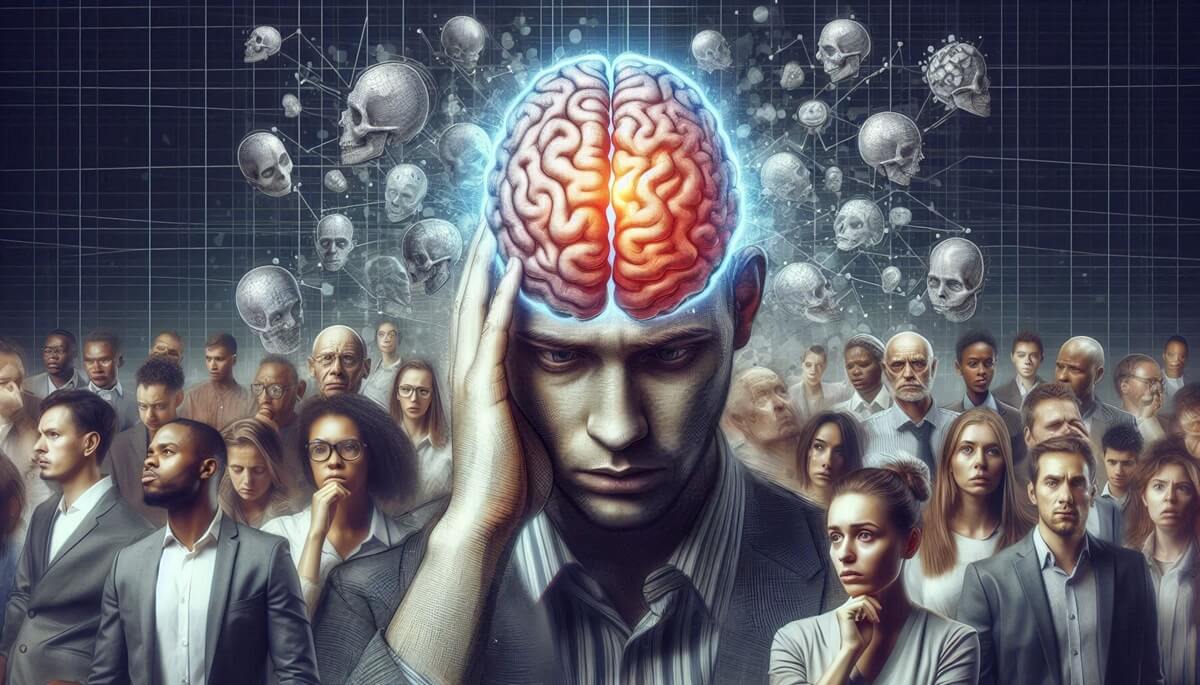
Under prolonged stress, the brain prioritises survival over performance. Cortisol and adrenaline remain elevated, attention narrows, and the nervous system becomes hypervigilant. In reality, this makes short-term coping possible, but long-term functioning unsustainable.
Studies on burnout and productivity show that prolonged stress directly reduces performance and cognitive functioning, even when motivation remains high ([International Journal of Environmental Research and Public Health, 2021]).
Here’s What’s Actually Happening Inside Your Brain
Key changes include:
- Reduced activity in the prefrontal cortex (the part responsible for decision-making, focus, and perspective)
- Increased threat sensitivity in the amygdala (your brain’s alarm system stays switched on)
- Dopamine depletion affects motivation and reward (affecting motivation, pleasure, and reward processing)
- Cognitive bandwidth collapse (constant mental load leaves nothing for daily tasks)
This is not a character flaw. It is biology responding exactly as designed.
Why Burnout Feels Personal (But Isn’t)
Most people internalise burnout as failure. They assume they are lazy, ungrateful, unmotivated, or incapable. In reality,self-blame is a symptom of prolonged stress.
A stressed brain loses access to nuance and self-compassion. It defaults to harsh internal narratives because threat states demand simple explanations. When your nervous system is overloaded, “I’m the problem” feels easier to process than “the load I’m carrying is unsustainable.”
Understanding this shift is often the first moment of relief.
Healing Requires Regulation, Not More Pressure
Recovery does not begin with pushing harder. It begins with nervous system regulation, cognitive load reduction, and rebuilding internal safety.
This series explores burnout from the inside out, through exhaustion, overwhelm, loss of motivation, and shame, using pain-language people already recognise.
You are not weak. You are overloaded. And recognizing that difference is where healing starts.
If you found this article interesting, it is worth looking at this beginner course on overwhelm, specifically created for woman
Frequently Asked Questions About Burnout and Chronic Stress
Is burnout the same as depression?
Burnout and depression can share symptoms like exhaustion, low motivation, and emotional numbness, but they are not the same thing. Burnout is primarily linked to prolonged stress and nervous system overload, as explained in our guide on persistent exhaustion despite rest. Therefore, burnout is primarily linked to prolonged stress and nervous system overload, while depression is a clinical mood disorder that affects many areas of life regardless of external stressors. Burnout can increase the risk of depression if stress remains unaddressed.
Why doesn’t rest fix burnout?
When stress is chronic, the nervous system stays in a state of threat even during downtime, which is why many people relate to sleeping without feeling restored. This means the body may be physically resting while the brain remains alert. Until the overall stress load is reduced and the nervous system feels safe enough to downshift, rest alone often doesn’t feel restorative.
Can financial and life stress really affect my brain?
Yes. Ongoing financial pressure, uncertainty, and high responsibility increase cognitive load and activate survival responses in the brain, often leading to the kind of daily overwhelm from small tasks many people experience. Over time, this affects focus, memory, emotional regulation, and decision-making. These changes are biological responses to sustained pressure, not personal weakness.
Why do I feel guilty for being exhausted?
Chronic stress reduces access to self-compassion and flexible thinking, which is closely linked to feeling lazy but exhausted at the same time. In threat states, the brain looks for simple explanations, and self-blame often fills the gap. Feeling guilty for being tired is a common stress response, not an accurate reflection of your effort or character.
How do I start recovering from chronic stress and burnout?
Recovery begins with reducing overall load and supporting nervous system regulation. Understanding patterns like stress-driven overwhelm and non-restorative exhaustion helps you target the real source of burnout. This includes realistic boundaries, restoring small moments of safety and rest during the day, and addressing ongoing stressors where possible. Understanding what is happening in your brain is often the first step toward change.