
How Stress Affects the Learning Brain (and What You Can Do About It)
Why Stress and Learning Don’t Mix
Ever blanked out during a test or struggled to recall information when you were under pressure? That’s not a memory problem; it’s your brain under stress.
When stress is triggered, your body releases cortisol, activating the “fight or flight” response. This is great for emergencies, but terrible for focus and memory.
Fear of failure often triggers a cycle of stress and procrastination. You know that overwhelming feeling when you need to study but can’t start, postponing it until the last minute, then cramming all at once.
The Neuroscience of Stress and Learning
- Cortisol floods the brain, reducing activity in the hippocampus (memory center).
- The amygdala goes into overdrive, prioritizing survival over creativity or problem-solving.
- Chronic stress shrinks neural connections, making it harder to learn and adapt.
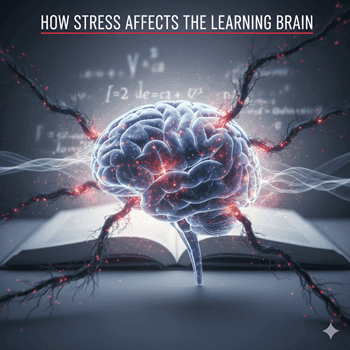
How Stress Affects the Learning Brain? In short: stress hijacks the brain’s ability to focus, remember, and stay motivated.
Did you know that rest can be an effective tool for reducing cognitive stress?
3 Stress-Reset Strategies for Better Learning
1. Breathe with Intention
Slow breathing signals safety to your nervous system. Try the 4-7-8 technique: inhale for 4, hold for 7, exhale for 8.
2. Reframe Stress as Energy
Instead of “I’m so nervous,” try “My body is preparing me to perform.” Reframing shifts how your brain interprets stress signals. By changing the way you think, you send signals of calm and safety to yourself.
3. Take Micro-Breaks
Short breaks reduce cortisol and give the brain time to consolidate learning. Even a 5-minute walk or stretch can help reset your focus. The movement increases blood flow and oxygen to your brain.
4. Journalling
Journaling serves as a powerful tool for emotional regulation, helping individuals process their thoughts and feelings in a structured and mindful way. By translating emotions into words, journaling fosters self-awareness, mitigates emotional intensity, and offers a healthy outlet for reflection. Regular writing can uncover patterns in mood and behavior, offering insights that support personal growth and emotional balance. fosters self-awareness, mitigates emotional intensity.
5. Getting enough Sleep
We all sometimes sit and study till all hours of the night, and that is just where we are going wrong. Your brain needs rest, so it has time to process all the information it has accumulated throughout the day. Read this article on the Power of Rest and discover how getting enough sleep can boost your brain performance.
Why This Matters
Stress isn’t just an emotional state; it’s a brain state. Once you learn to regulate it, you unlock better memory, focus, and resilience.
If you want to learn more, about How Stress Affects the Learning Brain (and What You Can Do About It) enroll in our free course, Focus Reset: Building Clarity in a Distracted World
At ShiftEd Minds, we help learners develop stress strategies that turn pressure into progress.