
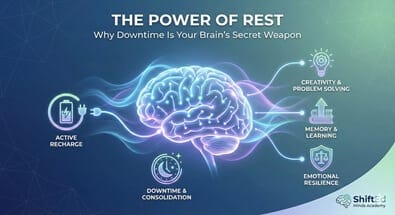
The Power of Rest: Why Downtime Is Your Brain’s Secret Weapon
Rest isn’t a luxury. It’s a biological requirement
We all need the power of rest, especially if you want a sharper mind, stronger focus, and long-term mental resilience. In a world that worships constant productivity, the power of rest is often misunderstood or dismissed. But neuroscience is clear: your brain becomes smarter, stronger, and more creative when you slow down.
Why Rest Is Essential for a High-Performing Brain
Hustle culture has trained us to believe that stopping means falling behind. In reality, the opposite is true.
During rest, your brain enters a state of maintenance, a powerful process where it cleans, consolidates, and reorganizes information. This is where real learning happens.
Read more on how stress impacts your brain
What Actually Happens in the Brain During Rest
- Memory consolidation: Rest strengthens neural pathways so new information sticks.
- Creativity boost: Downtime activates the default mode network, the part of your brain responsible for imagination, insights, and problem-solving.
- Emotional regulation: Sleep and relaxation reset your stress response, boosting resilience and stability.
- Cognitive clarity: Rest reduces mental clutter, so you think faster and focus deeper.
Without rest, learning is shallow and fleeting. With rest, it becomes lasting and adaptable. The Power of Rest doesn’t just refresh, it cleans your mind. Here are some simple ways to support your mental well-being
The 4 Types of Rest You Need
To truly unlock the power of rest, you need more than sleep. Your brain requires different forms of recovery to stay balanced and high-functioning.
- Mental Rest – Stepping away from focus-heavy tasks to prevent overload.
- Sensory Rest – Reducing noise, screens, and stimulation so the nervous system can reset.
- Creative Rest – Engaging in art, nature, or inspiring activities that refill your imagination.
- Social Rest – Allowing yourself quiet time alone to recharge, especially if you’re constantly supporting others.
Simple Ways to Add Rest
You don’t need a holiday to restore your brain. Small shifts create big cognitive upgrades:
- Take short naps or quiet breaks between tasks.
- Walk in nature without your phone disrupting your mind.
- Add “white space” to your calendar, intentional pockets with no tasks.
- Practice slow breathing or mindfulness to reduce cognitive strain.
These micro-moments of rest compound into better focus, creativity, and emotional balance.
Why This Matters for Learners, Leaders, and High-Achievers
The power of rest is highly underestimated. Rest is not wasted time; it’s strategic brain training. When you permit yourself to pause, you unlock deeper concentration, faster learning, and higher performance.
And this is exactly what we teach inside ShiftEd Minds:
How to work with your brain, not against it. Discover more on rewiring how you think and learn
If you’re ready to upgrade your cognitive performance, emotional resilience, and learning capacity
Read more about ShiftEd Minds Community or start your free course.
At ShiftEd Minds, we teach learners to work with their brains, not against them.